
Common Mistakes to Avoid When Buying a Ride On Sweeper
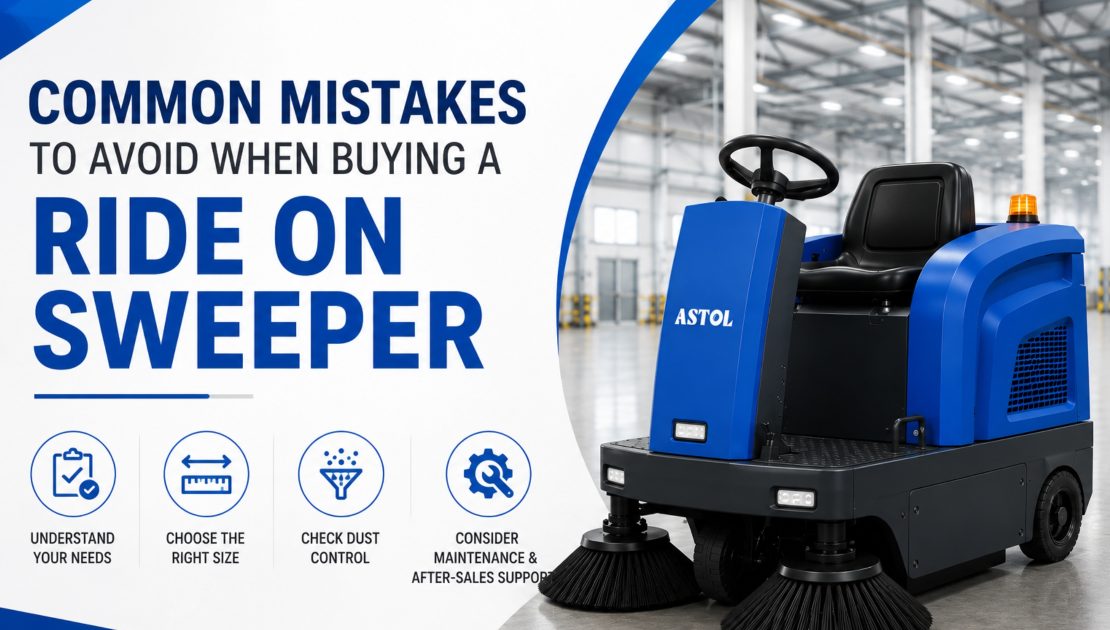
Buying a Ride On Sweeper is a smart investment for businesses that need to keep large industrial and commercial spaces clean. Warehouses, factories, logistics centers, shopping malls, airports, and parking areas all require regular sweeping to remove dust, dirt, leaves, packaging waste, and other debris. A ride on sweeper helps complete this task quickly while reducing manual labor and improving workplace safety.
However, choosing the wrong machine can lead to poor cleaning performance, higher maintenance costs, and unnecessary expenses. Many businesses focus only on price or appearance and overlook important features that affect long-term performance.
In this blog, we’ll discuss the most common mistakes to avoid when buying a Ride On Sweeper so you can make the right investment for your business.
Why Choosing the Right Ride On Sweeper Matters
A Ride On Sweeper is designed to improve cleaning efficiency and reduce operational costs. The right machine helps clean large areas quickly, collects dust effectively, and improves the overall appearance of your facility.
Choosing the wrong machine can result in frequent breakdowns, poor cleaning quality, higher operating costs, and lower productivity. Taking the time to evaluate your cleaning requirements before purchasing can save money and improve long-term performance.
Mistake #1: Not Understanding Your Cleaning Requirements
One of the biggest mistakes businesses make is purchasing a machine without first understanding their cleaning needs.
Before buying a Ride On Sweeper, ask yourself:
- How large is the area that needs cleaning?
- Will the machine be used indoors, outdoors, or both?
- What type of debris needs to be collected?
- How often will the machine be used?
A warehouse with light dust has different cleaning requirements than a manufacturing plant that produces metal shavings or packaging waste. Choosing a machine designed for your specific application ensures better cleaning results.
Mistake #2: Choosing the Wrong Machine Size
Machine size directly affects cleaning productivity.
Some businesses purchase a small ride on sweeper to save money, only to find that it takes too long to clean large areas. Others buy oversized machines for compact spaces where maneuverability becomes difficult.
The cleaning width and productivity of the machine should match the size of your facility.
A properly sized Ride On Sweeper helps complete cleaning tasks faster while improving efficiency.
Mistake #3: Ignoring Dust Control Features
Dust control is one of the most important features of any Ride On Sweeper, especially for indoor facilities.
If a machine lacks an efficient dust filtration system, fine dust particles can spread into the air during cleaning. This affects indoor air quality and creates an unhealthy working environment.
Look for machines with effective dust filters and enclosed debris collection systems. These features help keep warehouses and factories cleaner while protecting employees from airborne dust.
Mistake #4: Focusing Only on Price
Price is an important factor, but it should never be the only deciding factor.
A cheaper machine may have lower cleaning efficiency, limited durability, and higher maintenance costs over time. On the other hand, a quality Ride On Sweeper may require a higher initial investment but offers better productivity, lower operating costs, and a longer service life.
Always consider the total cost of ownership, including maintenance, spare parts, energy consumption, and machine lifespan.
Mistake #5: Overlooking Battery Life or Power Source
Ride on sweepers are available in both battery-powered and fuel-powered models.
Battery-powered machines are ideal for indoor cleaning because they operate quietly and produce no emissions. Fuel-powered sweepers are better suited for large outdoor areas where longer operating hours are required.
Choosing the wrong power source can reduce efficiency and increase operating costs.
Always select the machine based on where it will be used.
Mistake #6: Ignoring Debris Hopper Capacity
The debris hopper collects dust, dirt, and waste during sweeping.
A small hopper fills quickly and requires frequent emptying, which interrupts cleaning and reduces productivity.
If your facility generates a large amount of dust or debris, choose a Ride On Sweeper with a larger hopper capacity. This allows longer cleaning sessions without unnecessary interruptions.
Mistake #7: Not Considering Ease of Maintenance
Regular maintenance is essential for keeping a ride on sweeper in good condition.
Some buyers overlook how easy it is to clean filters, replace brushes, or access spare parts. Machines that are difficult to maintain often result in higher service costs and increased downtime.
Choose a machine that offers simple maintenance procedures and reliable service support.
Easy maintenance helps extend machine life and ensures consistent cleaning performance.
Mistake #8: Ignoring Operator Comfort
The operator may spend several hours using the machine each day.
Comfortable seating, user-friendly controls, good visibility, and smooth steering improve productivity while reducing operator fatigue.
An ergonomic Ride On Sweeper allows operators to work efficiently and safely throughout the cleaning schedule.
Mistake #9: Not Checking After-Sales Service
A Ride On Sweeper is a long-term investment, so reliable after-sales support is very important.
Before purchasing, check whether the supplier provides:
- Technical support
- Spare parts availability
- Machine servicing
- Operator training
- Warranty coverage
Good after-sales service helps reduce downtime and keeps your machine running efficiently.
Mistake #10: Buying Without Comparing Different Models
Many buyers purchase the first machine they see without comparing available options.
Compare different models based on:
- Cleaning width
- Productivity
- Hopper capacity
- Dust filtration system
- Battery life
- Build quality
- Ease of operation
- Maintenance requirements
Choosing the right model ensures you get the best value for your investment.
How to Choose the Right Ride On Sweeper
To select the best Ride On Sweeper, consider the following:
- Size of the facility
- Indoor or outdoor application
- Type of debris to be collected
- Cleaning frequency
- Hopper capacity
- Dust control system
- Operator comfort
- Maintenance requirements
- Availability of service support
Taking these factors into account will help you choose a machine that delivers reliable performance for years.
Why Choose Astol Cleantech Pvt. Ltd.
Astol Cleantech Pvt. Ltd. offers high-quality Ride On Sweeper machines designed for industrial and commercial cleaning applications.
Our machines provide:
- High cleaning efficiency
- Excellent dust control
- Durable construction
- Easy operation
- Reliable after-sales support
Whether you need a sweeper for warehouses, factories, logistics centers, parking areas, or commercial buildings, Astol Cleantech provides professional cleaning solutions tailored to your business needs.
Conclusion
Purchasing a Ride On Sweeper is a valuable investment, but choosing the right machine requires careful planning. By avoiding common mistakes such as focusing only on price, ignoring dust control, selecting the wrong machine size, or overlooking after-sales support, businesses can improve cleaning efficiency and reduce long-term costs.
A well-chosen Ride On Sweeper helps maintain cleaner facilities, improves workplace safety, and increases productivity. Investing in the right machine today will provide reliable performance and long-term value for your business.
Frequently Asked Questions (FAQs)
1. What should I consider before buying a Ride On Sweeper?
Consider your facility size, cleaning frequency, debris type, power source, hopper capacity, and after-sales service.
2. Is a battery-powered Ride On Sweeper better than a fuel-powered model?
Battery-powered models are ideal for indoor use, while fuel-powered models are generally better for large outdoor areas and extended operation.
3. Why is dust control important in a Ride On Sweeper?
An effective dust control system improves indoor air quality, reduces airborne particles, and creates a healthier working environment.
4. How often should a Ride On Sweeper be maintained?
Daily cleaning of brushes and the hopper is recommended, along with regular preventive maintenance according to the manufacturer’s guidelines.