
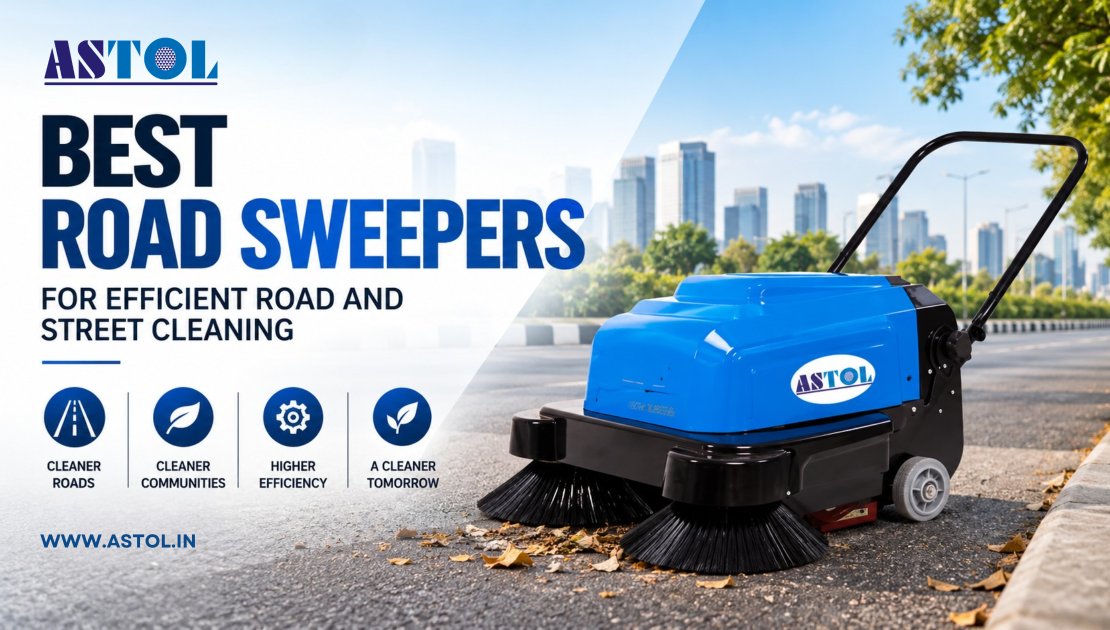
Best Road Sweepers for Efficient Road and Street Cleaning
Clean roads and streets are essential for maintaining safe, hygienic, and attractive public spaces. Roads collect dust, sand, leaves, mud, construction debris, and other waste every day. In busy cities and industrial areas, manual sweeping can be difficult, time-consuming, and labour-intensive.
Modern Road Sweepers provide an efficient solution for cleaning large roads, streets, parking areas, industrial sites, airports, and other open spaces.
In this blog, we will discuss the types, benefits, applications, important features, and buying considerations for choosing the best Road Sweeper for your cleaning requirements.
What Is a Road Sweeper?
A Road Sweeper is a professional cleaning machine designed to remove dust, dirt, leaves, sand, and other debris from roads and outdoor surfaces.
How Does a Road Sweeper Machine Work?
A road sweeper generally combines several cleaning functions into one machine.
Rotating brushes loosen and collect dirt from the road surface. Side brushes help clean along kerbs, edges, and other difficult-to-reach areas.
In vacuum road sweepers, a suction system collects fine dust and debris and transfers it into a collection hopper. Operators can also use water spraying to suppress dust during sweeping.
Once the hopper is full, operators can empty the collected waste at an appropriate disposal location.
This automated process cleans large areas more quickly than traditional manual sweeping.
Benefits of Using Road Sweepers
Faster Road and Street Cleaning
One of the biggest advantages of using a Road Sweeper is improved cleaning speed. A machine can cover large areas much faster than a manual cleaning team, making it suitable for roads and open spaces that require regular maintenance.
Reduced Labour Requirements
Manual road sweeping requires significant manpower, especially for large municipal and industrial areas. Mechanical road sweepers reduce dependence on manual sweeping and allow operators to complete larger cleaning tasks efficiently.
Better Dust and Debris Collection
Road sweepers can collect different types of debris, including dust, sand, leaves, small stones, and general roadside waste. Vacuum-based models can also provide effective collection of fine particles.+
Improved Road Safety
Debris on roads can create hazards for vehicles, cyclists, and pedestrians. Regular sweeping helps remove loose materials and contributes to safer and cleaner road conditions.
Improved Public Hygiene
Regular road cleaning helps maintain cleaner public spaces and reduces the accumulation of waste and dust in high-traffic areas.
Consistent Cleaning Performance
Mechanical sweeping provides a systematic cleaning process. This makes it easier for organizations to maintain regular cleaning schedules and consistent results.
Types of Road Sweepers
Different cleaning environments require different types of road sweeping equipment.
Mechanical Road Sweepers
Mechanical road sweepers use rotating brushes and mechanical systems to collect debris. They are suitable for general road and street cleaning applications and can be useful for removing heavier debris.
Vacuum Road Sweepers
Vacuum road sweepers combine brushes with a suction system to collect dirt and fine particles.They effectively control dust and fine debris in areas where cleanliness matters.
Compact Road Sweepers
Compact road sweepers work well in areas where maneuverability matters. They clean parking areas, narrow roads, residential areas, campuses, and commercial spaces.
Truck-Mounted Road Sweepers
Manufacturers design truck-mounted sweepers for large-scale cleaning applications. They can be suitable for highways, major roads, municipal operations, and other extensive outdoor areas.
Where Are Road Sweepers Used?
A Road Sweeper Machine serves many industries and applications.
Municipal Roads and Streets
Municipal authorities use road sweepers to maintain public roads, streets, and urban areas.
Highways
Highway cleaning requires machines capable of covering large distances efficiently. Road sweepers help remove dust and debris from road surfaces and surrounding areas.
Industrial Areas
Factories and industrial facilities can use sweepers to clean internal roads, yards, loading areas, and other outdoor spaces.
Airports
Airports require high standards of cleanliness across roads, service areas, parking zones, and other outdoor surfaces.
Parking Areas
Large parking facilities collect dust, leaves, litter, and other debris. Compact and commercial sweepers can help maintain these areas.
Construction Sites
Construction activities can leave behind sand, dust, stones, and other debris. Suitable road sweepers can help maintain cleaner access roads and surrounding areas.
Large Commercial Campuses
Universities, business parks, residential communities, and commercial campuses can use road sweeping equipment to maintain their outdoor areas.
Key Features to Look for in the Best Road Sweeper
Choosing the right Road Sweeper requires evaluating the machine according to your cleaning requirements.
Sweeping Width
Sweeping width determines how much surface the machine can clean during each pass. A wider sweeping path can improve productivity when cleaning large open areas.
Hopper Capacity
The machine can gather more waste before it needs to be emptied thanks to a larger hopper. This can reduce interruptions during long cleaning operations.
Brush System
The brush configuration affects how effectively the machine can collect debris. Side brushes are particularly useful for cleaning along kerbs and edges.
Suction Performance
For vacuum road sweepers, suction performance is important for collecting fine dust and debris efficiently.
Dust Suppression
Water spraying systems can help control dust during sweeping, particularly in dry environments.
Maneuverability
The machine should be easy to operate and maneuver according to the size and layout of the cleaning area.
Operator Comfort
Good visibility, ergonomic controls, and a comfortable operating position can make long cleaning operations easier for the operator.
Easy Maintenance
Accessible components and readily available replacement parts can help reduce downtime and simplify routine maintenance.
How to Choose the Best Road Sweeper
Before buying a Road Sweeper Machine, consider the size and type of area that needs to be cleaned.
For large highways and municipal roads, a high-capacity machine may be appropriate. For smaller roads, parking areas, and commercial campuses, a compact sweeper may provide better maneuverability.
You should also consider the type of debris commonly found in the area. Heavy debris may require a different machine configuration from areas that primarily contain fine dust.
Cleaning frequency is another important factor. Facilities that require daily sweeping should consider machine durability, hopper capacity, operating efficiency, and maintenance requirements.
It is also important to consider the availability of spare parts, technical support, warranty, and after-sales service before making a purchase.
Road Sweepers vs Manual Road Cleaning
Manual sweeping can be suitable for small areas and specific cleaning tasks, but it becomes inefficient when large areas need to be cleaned regularly.
A Road Sweeper can cover larger areas in less time while reducing physical effort for cleaning teams. Machine-based sweeping can also provide more consistent results and help control dust and debris more effectively.
For municipalities, industrial facilities, airports, and large commercial properties, mechanized road cleaning can significantly improve cleaning productivity.
Common Mistakes to Avoid When Buying a Road Sweeper
One of the most common mistakes is choosing a machine based only on its purchase price. A low-cost machine may not provide the capacity or performance required for demanding applications.
Another mistake is ignoring hopper capacity. A machine with insufficient collection capacity may require frequent emptying, reducing productivity.
Selecting the wrong machine size can also create problems. A large machine may not be suitable for narrow roads or congested areas, while a small sweeper may take too long to clean extensive areas.
Businesses should also consider maintenance, spare parts, operator training, and after-sales support before making a final decision.
Road Sweeper Maintenance Tips
Regular maintenance is essential for maintaining reliable cleaning performance.
Clean the brushes regularly and inspect them for excessive wear. Check the hopper and remove collected debris after use.
Filters should be cleaned or replaced according to the manufacturer’s recommendations. For machines equipped with water-spraying systems, inspect the water tank, pipes, and nozzles regularly.
Tyres, suction hoses, brushes, and other moving components should also be inspected periodically.
Following the manufacturer’s maintenance schedule can help prevent unexpected breakdowns and extend the working life of the machine.
Why Choose Astol Cleantech Pvt. Ltd.?
Astol Cleantech Pvt. Ltd. provides professional cleaning equipment for commercial, industrial, and municipal applications.
Our range of cleaning solutions is designed to help organizations improve cleaning efficiency, reduce manual effort, and maintain cleaner working environments.
Whether you need equipment for industrial areas, commercial campuses, roads, parking areas, or other large outdoor spaces, choosing the right cleaning machine based on your specific requirements is essential.
Astol Cleantech provides professional product guidance and after-sales support to help businesses select suitable cleaning solutions.
Conclusion
A Road Sweeper is an efficient solution for maintaining clean roads, streets, industrial areas, parking facilities, airports, and large outdoor spaces. By automating the sweeping and collection process, these machines can help reduce labour requirements, improve productivity, control dust, and maintain cleaner public and commercial environments.
When choosing the best road sweeper, consider the cleaning area, type of debris, sweeping width, hopper capacity, brush system, dust-control requirements, maneuverability, maintenance, and after-sales support.
The right Road Sweeper Machine can make regular road and street cleaning faster, more efficient, and easier to manage.
Frequently Asked Questions
What is a Road Sweeper used for?
A Road Sweeper is used to remove dust, dirt, leaves, sand, and other debris from roads, streets, parking areas, industrial sites, and other outdoor surfaces.
Which type of Road Sweeper is best for city roads?
The ideal machine depends on road size, traffic conditions, debris type, and cleaning requirements. Compact sweepers can be suitable for smaller urban areas, while larger machines are better for major roads.
What is the difference between a mechanical and vacuum road sweeper?
Mechanical road sweepers primarily use brushes and mechanical collection systems, while vacuum road sweepers use brushes along with suction to collect debris and fine particles.
Can Road Sweepers be used in industrial areas?
Yes. Road sweepers can be used for cleaning internal roads, yards, parking areas, loading zones, and other suitable outdoor areas in industrial facilities.
How often should a Road Sweeper be maintained?
Basic cleaning and inspection should be carried out regularly, while preventive maintenance should follow the manufacturer’s recommended service schedule.
What should I consider before buying a Road Sweeper?
Consider the size of the cleaning area, type of debris, sweeping width, hopper capacity, brush system, dust suppression, maneuverability, operating costs, maintenance, and after-sales support.