
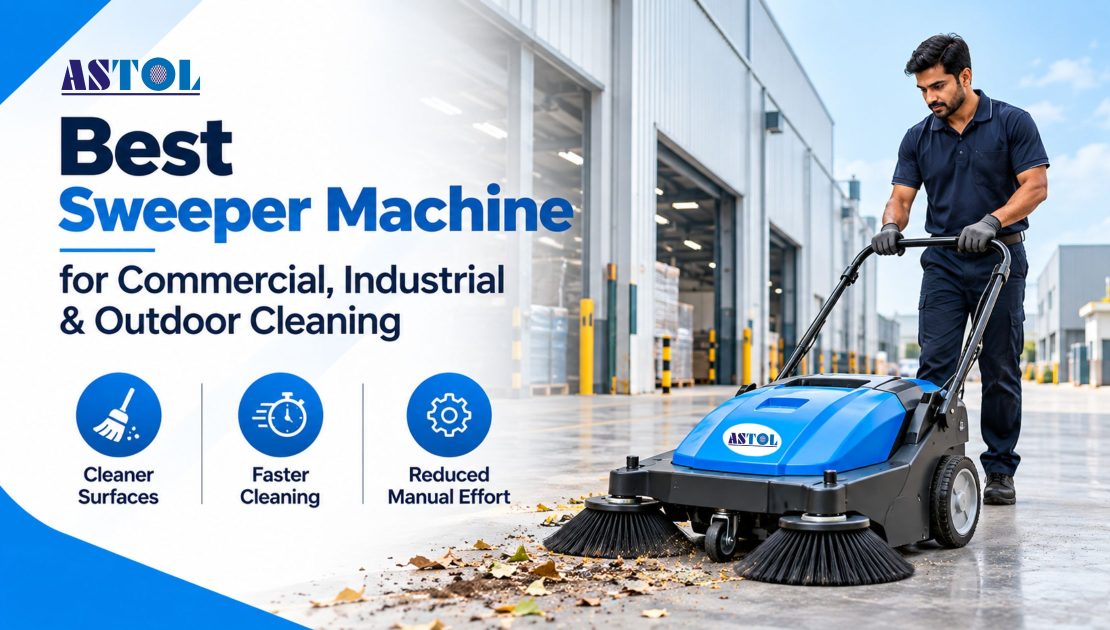
Best Sweeper Machine for Commercial, Industrial & Outdoor Cleaning
Keeping large spaces clean can become difficult when dust, dirt, leaves, sand, and other debris build up every day. Manual sweeping takes time and requires significant manpower, especially in factories, warehouses, parking areas, roads, commercial buildings, and large outdoor spaces.
A Best Sweeper Machine can help businesses clean these areas faster and with less manual effort. Modern sweeping machines use rotating brushes and dust collection systems to remove debris from different surfaces.
Businesses can choose from different types of sweepers, including walk-behind sweepers, housekeeping sweepers, walk behind road sweepers, and ride-on sweepers. The right choice depends on the cleaning area, type of debris, operating environment, and cleaning frequency.
In this guide, we will discuss the types, benefits, features, applications, and important factors to consider when choosing a sweeper machine.
What Is a Sweeper Machine?
A sweeper machine is professional cleaning equipment that removes dust, dirt, leaves, sand, and other loose debris from floors and outdoor surfaces.
The machine uses rotating brushes to collect debris and direct it into a waste hopper or collection container. Many professional models also include filtration systems that help control dust during sweeping.
Compared with manual brooms, sweeper machines can cover larger areas more efficiently and reduce the physical effort required from cleaning staff.
Why Use the Best Sweeper Machine?
Businesses with large cleaning areas can benefit from replacing or supplementing manual sweeping with mechanical equipment.
Faster Cleaning
Sweeper machines cover larger areas in less time than manual sweeping. This helps cleaning teams complete routine cleaning tasks more efficiently.
Reduced Manual Effort
Operators can use the machine instead of repeatedly sweeping with a broom. This reduces physical effort and allows cleaning teams to focus on other housekeeping activities.
Better Debris Collection
Rotating brushes collect loose debris and direct it into the machine’s hopper. This helps operators collect dust, dirt, leaves, and other suitable materials more effectively.
Consistent Cleaning
A machine can maintain a consistent sweeping pattern across large areas when operators use it correctly.
Suitable for Large Areas
Businesses can use different sweeper models for warehouses, factories, parking areas, roads, pathways, commercial campuses, and other large spaces.
Types of Sweeper Machines
Different cleaning environments require different types of sweeping equipment.
1. Walk Behind Sweeper
A walk-behind sweeper allows an operator to control the machine while walking behind it. Its compact design makes it useful for small and medium-sized areas.
Businesses can use walk-behind sweepers in:
- Warehouses
- Parking areas
- Footpaths
- Small industrial premises
- Schools
- Commercial buildings
- Residential complexes
These machines can provide good maneuverability where larger equipment cannot operate easily.
2. Housekeeping Sweeper
A Housekeeping Sweeper supports professional cleaning teams in commercial and institutional environments.
Hotels, malls, offices, schools, hospitals, and other facilities can use housekeeping sweepers to remove dust, dirt, paper, leaves, and other loose debris.
A compact housekeeping sweeper can help cleaning staff maintain corridors, entrances, parking areas, walkways, and other suitable surfaces.
When selecting a housekeeping sweeper, consider the cleaning width, dust collection system, machine size, operating time, and ease of operation.
3. Walk Behind Road Sweepers
Walk Behind Road Sweepers provide a practical solution for cleaning roads, pathways, parking spaces, industrial campuses, and other outdoor areas.
Their compact design allows operators to clean areas where large ride-on sweepers may have difficulty operating.
Businesses and facility teams can use these sweepers for:
- Internal roads
- Parking areas
- Footpaths
- Factory campuses
- Warehouses and loading areas
- Commercial complexes
- Public pathways
The right walk-behind road sweeper should match the surface type, debris, cleaning area, and required cleaning frequency.
4. Ride-On Sweeper
Ride-on sweepers allow operators to sit on the machine while cleaning. They are generally suitable for larger areas where businesses need higher cleaning productivity.
Typical applications include:
- Large warehouses
- Manufacturing plants
- Parking facilities
- Industrial campuses
- Airports
- Large commercial properties
Ride-on sweepers can reduce the time required to cover extensive floor areas compared with smaller manual or walk-behind machines.
Best Sweeper Machine for Different Applications
The best machine depends on the environment and cleaning requirements.
| Application | Suitable Sweeper Type |
|---|---|
| Warehouses | Walk-Behind or Ride-On Sweeper |
| Factories | Industrial or Ride-On Sweeper |
| Hotels | Housekeeping Sweeper |
| Malls | Walk-Behind or Ride-On Sweeper |
| Parking Areas | Walk-Behind Road Sweeper or Ride-On Sweeper |
| Roads & Pathways | Walk Behind Road Sweeper |
| Schools & Institutions | Compact Walk-Behind Sweeper |
| Large Industrial Campuses | Ride-On Sweeper |
Businesses should evaluate the cleaning area and operating conditions before selecting a machine.
Key Features to Look for in the Best Sweeper Machine
Choosing a sweeper based only on price can lead to the wrong equipment. Consider the following features before purchasing.
Cleaning Width
Cleaning width determines how much surface the machine can cover during each pass. A wider cleaning path can help cover large areas more efficiently.
Brush Configuration
Check the type, size, and configuration of the brushes. The right brush setup depends on the surface and type of debris.
Dust Collection Capacity
A larger waste hopper allows operators to collect more debris before they need to empty it.
Filtration System
A suitable filtration system helps manage dust generated during sweeping. Choose the filtration system according to the application and manufacturer’s specifications.
Battery and Operating Time
For battery-powered sweepers, check battery capacity, charging time, and expected operating time. Select a model that can handle your regular cleaning schedule.
Maneuverability
A compact and easy-to-control machine can make cleaning easier in narrow spaces, corridors, pathways, and areas with obstacles.
Build Quality
Choose equipment with construction suitable for the intended operating environment and cleaning frequency.
Maintenance Requirements
Check brush replacement, filter cleaning, battery maintenance, spare parts availability, and service requirements before purchasing.
Housekeeping Sweeper: Applications and Benefits
A housekeeping sweeper can help professional cleaning teams maintain clean indoor and outdoor areas.
Hotels can use these machines around entrances, walkways, parking areas, and other suitable spaces. Malls and offices can use compact sweepers for corridors, common areas, and external premises.
Schools and institutions can also use housekeeping sweepers to maintain pathways and open areas.
The main benefits include faster sweeping, reduced manual effort, consistent cleaning, and easier debris collection.
Walk Behind Road Sweepers for Outdoor Cleaning
Outdoor areas often collect leaves, sand, dust, paper, and other debris. Manual sweeping can take considerable time when cleaning large roads and pathways.
Walk behind road sweepers allow operators to clean these areas using rotating brushes and a collection system.
Their compact size makes them suitable for areas where operators need better maneuverability. Facility managers can use them around industrial campuses, parking areas, internal roads, pathways, and commercial premises.
Before purchasing, check the machine’s cleaning width, brush system, collection capacity, operating time, surface compatibility, and dust-control features.
How to Choose the Best Sweeper Machine
Follow these steps when selecting a sweeper machine.
1. Measure the Cleaning Area
Determine the total area you need to clean. Large facilities may require ride-on equipment, while smaller areas may work well with walk-behind models.
2. Identify the Type of Debris
Identify whether the machine will collect dust, sand, leaves, paper, packaging waste, or other debris. Select brushes and equipment designed for the application.
3. Consider Indoor or Outdoor Cleaning
Indoor floors may require a compact housekeeping sweeper, while outdoor roads and pathways may require a suitable walk behind road sweeper.
4. Check Cleaning Frequency
If your team cleans several times a day, select equipment that can handle the required operating schedule.
5. Check Hopper Capacity
Consider how much debris the machine will collect during each cleaning session. A suitable hopper capacity can reduce frequent emptying.
6. Consider Operator Requirements
Choose a machine that operators can control comfortably and safely. Simple controls can make training and daily operation easier.
7. Evaluate Maintenance and Service
Check the availability of spare parts, consumables, maintenance support, and after-sales service.
Sweeper Machine vs Manual Sweeping
| Factor | Manual Sweeping | Sweeper Machine |
|---|---|---|
| Cleaning Speed | Generally slower | Generally faster |
| Manual Effort | High | Lower |
| Large Area Cleaning | Time-consuming | More efficient |
| Debris Collection | Manual collection required | Integrated collection system |
| Cleaning Consistency | Depends on operator | More consistent when operated correctly |
| Productivity | Lower for large areas | Higher for suitable applications |
A sweeper machine does not eliminate the need for cleaning staff, but it can help them complete sweeping tasks more efficiently.
Common Mistakes When Buying a Sweeper Machine
Choosing Only Based on Price
The cheapest machine may not meet your cleaning requirements. Compare specifications, operating costs, service, and application suitability.
Ignoring the Cleaning Area
A small machine may take too long to clean a large facility, while a large machine may not suit narrow or congested spaces.
Selecting the Wrong Brush
Different surfaces and debris types may require different brush configurations. Check the manufacturer’s recommendations.
Overlooking Dust Filtration
Dust control matters, especially in indoor environments. Check the filtration system before purchasing.
Ignoring Battery Runtime
For battery-powered models, make sure the operating time matches your cleaning schedule.
Not Checking After-Sales Support
Ask about spare parts, servicing, consumables, warranty, and technical support before making a purchase.
Maintenance Tips for Sweeper Machines
Regular maintenance helps maintain cleaning performance and equipment reliability.
- Clean the brushes regularly.
- Remove collected debris from the hopper.
- Inspect and clean filters according to the manufacturer’s instructions.
- Check brushes for wear and replace them when required.
- Inspect wheels and moving components.
- Check battery condition and charging equipment on battery-powered models.
- Keep the machine clean after use.
- Follow the manufacturer’s preventive maintenance schedule.
Why Choose Astol Cleantech for Sweeper Machines?
Astol Cleantech provides professional cleaning equipment for commercial, industrial, and institutional applications.
The company offers a range of cleaning machines designed for different cleaning requirements, including sweepers, scrubber dryers, vacuum cleaners, single-disc scrubbers, pressure washers, and other professional cleaning equipment.
For businesses looking for the best sweeper machine, the selection should depend on the cleaning area, surface, debris type, operating conditions, required productivity, and maintenance requirements.
Astol Cleantech can help businesses evaluate these requirements and select suitable professional cleaning equipment.
Conclusion
The Best Sweeper Machine depends on your cleaning environment, area size, debris type, cleaning frequency, and operating requirements.
A compact housekeeping sweeper can support cleaning teams in hotels, offices, malls, schools, and other commercial spaces. Walk behind road sweepers can help clean roads, pathways, parking areas, and industrial campuses. For large facilities, ride-on sweepers can provide greater coverage and productivity.
Before purchasing, compare cleaning width, brush configuration, hopper capacity, filtration, operating time, maneuverability, maintenance requirements, and after-sales support.
Choosing the right sweeper machine can help businesses reduce manual sweeping effort and maintain cleaner commercial, industrial, and outdoor spaces.
Frequently Asked Questions
What is the best sweeper machine for industrial cleaning?
The suitable machine depends on the size of the facility, type of debris, surface, cleaning frequency, and required productivity. Walk-behind and ride-on sweepers can serve different industrial applications.
Which sweeper is suitable for housekeeping?
A compact housekeeping sweeper can suit hotels, offices, malls, schools, hospitals, and other commercial or institutional facilities.
What are walk behind road sweepers used for?
Walk behind road sweepers can clean internal roads, pathways, parking areas, industrial campuses, commercial premises, and other outdoor surfaces.
Is a sweeper machine better than manual sweeping?
A sweeper machine can cover suitable areas faster and reduce manual effort. The actual performance depends on the machine, application, surface, and operating conditions.
How do I choose the best sweeper machine?
Consider the cleaning area, debris type, indoor or outdoor application, cleaning frequency, cleaning width, hopper capacity, filtration, operating time, maintenance, and service support.
How often should I maintain a sweeper machine?
Perform routine inspections and cleaning regularly, and follow the manufacturer’s recommended maintenance schedule for filters, brushes, batteries, and other components.