
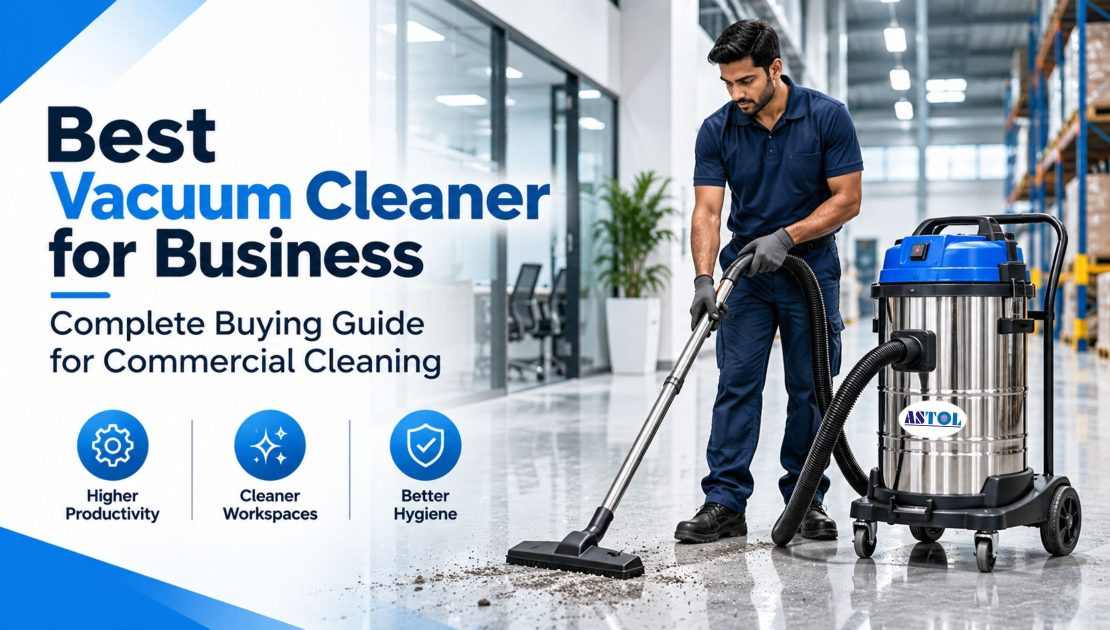
Best Vacuum Cleaner for Business: Complete Buying Guide for Commercial Cleaning
Businesses need clean, safe, and presentable spaces every day. Offices, hotels, restaurants, gyms, hospitals, warehouses, retail stores, and factories deal with dust, dirt, debris, hair, packaging waste, and occasional liquid spills.
Manual cleaning can take considerable time, especially when businesses manage large floor areas. A professional vacuum cleaner can help cleaning teams collect dirt and debris faster while reducing physical effort.
But choosing the Best Vacuum Cleaner for Business requires more than looking at price or motor power. Businesses should consider the cleaning area, type of dirt, operating frequency, filtration, collection capacity, accessories, and maintenance requirements.
In this guide, we will explain the different types of business vacuum cleaners, their benefits, important features, applications, and how to choose the right machine for your business.
What Is a Business Vacuum Cleaner?
A business vacuum cleaner is a professional cleaning machine designed for commercial or industrial environments. It helps operators collect dust, dirt, debris, and other suitable materials from floors, carpets, workstations, furniture, and other surfaces.
Unlike typical household vacuum cleaners, commercial models can support more frequent cleaning and demanding operating conditions. Depending on the model, businesses can choose dry vacuum cleaners, wet and dry vacuum cleaners, or industrial vacuum cleaners.
The right machine depends on the business environment, cleaning requirements, type of material being collected, and frequency of use.
Why Do Businesses Need a Professional Vacuum Cleaner?
Professional vacuum cleaners can make routine cleaning more efficient for businesses that manage high-traffic or large areas.
Faster Cleaning
A suitable commercial vacuum cleaner can help operators collect dust and debris quickly across offices, hotels, retail spaces, warehouses, and other business premises.
Reduced Manual Effort
Vacuum cleaning reduces the need for repeated sweeping and manual collection. This allows cleaning staff to complete routine tasks with less physical effort.
Better Dirt and Dust Collection
A vacuum cleaner collects suitable dust, dirt, hair, and debris instead of simply moving it around the floor.
Professional Cleaning Results
Regular vacuum cleaning can help businesses maintain cleaner and more presentable premises for employees, customers, guests, and visitors.
Higher Cleaning Productivity
Professional equipment can help housekeeping teams complete routine cleaning tasks more efficiently, especially when they need to clean multiple areas every day.
Types of Vacuum Cleaners for Businesses
Different businesses require different types of vacuum cleaners. Understanding the main options can help you select the right machine.
Commercial Dry Vacuum Cleaner
Commercial dry vacuum cleaners collect dust, dirt, hair, paper particles, and other dry debris.
They work well in:
- Offices
- Hotels
- Retail stores
- Schools
- Gyms
- Commercial buildings
- Showrooms
Businesses that mainly need routine dry floor and carpet cleaning can consider a commercial dry vacuum cleaner.
Wet & Dry Vacuum Cleaner
Wet and dry vacuum cleaners collect compatible dry debris and liquid spills.
They can work well in businesses where cleaning teams regularly handle both dry dirt and liquids.
Common applications include:
- Restaurants
- Workshops
- Warehouses
- Hotels
- Commercial kitchens
- Industrial facilities
- Maintenance areas
Always check the manufacturer’s specifications before collecting any particular liquid or material.
Industrial Vacuum Cleaner
Industrial vacuum cleaners handle more demanding cleaning applications in factories, manufacturing units, workshops, and other industrial environments.
They can collect suitable dust, debris, production waste, and compatible materials, depending on the machine configuration.
Businesses should select industrial vacuum cleaners according to the material they need to collect, required filtration, collection capacity, cleaning frequency, and operating environment.
Backpack Vacuum Cleaner
Backpack vacuum cleaners allow operators to carry the machine while cleaning. Their compact design can help operators clean stairs, narrow corridors, seating areas, and other locations where larger machines may be difficult to use.
They can be useful in:
- Hotels
- Offices
- Airports
- Retail stores
- Educational institutions
- Commercial buildings
Heavy-Duty Vacuum Cleaner
Heavy-duty vacuum cleaners support frequent cleaning and demanding commercial applications.
They generally provide durable construction and larger collection options compared with light-duty machines. Businesses should select a heavy-duty model based on the expected workload and manufacturer’s specifications.
Best Vacuum Cleaner for Different Businesses
The best vacuum cleaner depends on the type of business and its cleaning requirements.
| Business Type | Recommended Vacuum |
|---|---|
| Offices | Commercial Dry Vacuum |
| Hotels | Commercial Dry / Wet & Dry Vacuum |
| Restaurants | Wet & Dry Vacuum |
| Gyms | Commercial Dry Vacuum |
| Hospitals | Professional Vacuum with Suitable Filtration |
| Retail Stores | Commercial Dry Vacuum |
| Warehouses | Wet & Dry / Industrial Vacuum |
| Factories | Industrial Vacuum Cleaner |
| Workshops | Heavy-Duty / Wet & Dry Vacuum |
| Schools | Commercial Vacuum Cleaner |
This table provides a general guide. Businesses should evaluate their actual cleaning conditions before purchasing equipment.
Key Features to Look for in the Best Vacuum Cleaner for Business
Choosing the right machine requires more than checking the motor wattage. Consider the complete cleaning application.
Suction Performance
The vacuum should provide suitable suction for the material and surface you need to clean.
Do not choose a machine based only on motor wattage. Compare the manufacturer’s performance specifications and select a model that matches your application.
Collection Capacity
Collection capacity determines how much material the machine can collect before the operator needs to empty the container.
Businesses with large cleaning areas or high debris volumes may benefit from a larger collection capacity.
Filtration System
The filtration system plays an important role in vacuum performance and dust management.
Choose filtration based on the type and size of particles you need to collect. Fine, hazardous, combustible, or specialized dust may require specific filtration and certified equipment.
Wet & Dry Capability
If your business regularly handles both dry debris and compatible liquid spills, a wet and dry vacuum can provide greater flexibility.
If you only need dry cleaning, a commercial dry vacuum may provide a simpler solution.
Motor Performance
Consider the machine’s overall performance rather than focusing only on motor power.
Look at suction performance, airflow, operating requirements, and the manufacturer’s specifications when comparing different models.
Hose and Accessories
Different cleaning surfaces require different accessories.
Useful accessories can include:
- Floor brushes
- Crevice tools
- Upholstery tools
- Dusting brushes
- Extension tubes
- Wet floor tools
Choose a machine that offers accessories suitable for your cleaning requirements.
Noise Level
Noise can matter in offices, hotels, hospitals, schools, and other occupied spaces.
A vacuum with a suitable noise level can make cleaning easier without causing unnecessary disturbance to employees, customers, guests, or patients.
Mobility
Good wheels, handles, and a practical machine design make it easier for operators to move the vacuum between different areas.
Consider the size of doorways, stairs, corridors, elevators, and other areas where the machine will operate.
Build Quality
Businesses often use cleaning equipment more frequently than households. Select a machine with construction suitable for your expected workload and operating environment.
Maintenance and Service
Before purchasing, check filter replacement, spare parts, service availability, warranty, and preventive maintenance requirements.
Good after-sales support can help businesses maintain equipment performance over time.
How to Choose the Best Vacuum Cleaner for Your Business
Follow these steps before purchasing a business vacuum cleaner.
1. Identify Your Business Type
First, understand your cleaning environment. An office may need a different vacuum from a factory, restaurant, warehouse, or hotel.
2. Measure the Cleaning Area
Estimate the total area you need to clean. Larger facilities may require higher-capacity or heavy-duty equipment.
3. Identify the Type of Dirt and Debris
Determine whether your team needs to collect dust, hair, food particles, packaging waste, production debris, or compatible liquid spills.
4. Choose Dry or Wet & Dry Cleaning
Choose a dry vacuum if you mainly collect dry dirt and dust.
Choose a wet and dry model when your cleaning team needs to handle both compatible dry debris and liquid spills.
5. Determine Required Capacity
Consider how much debris your team generates during a typical cleaning cycle. A suitable collection capacity can reduce the number of times operators need to empty the machine.
6. Check Suction and Filtration
Compare suction performance and filtration according to your application.
For specialized dust or hazardous materials, consult the manufacturer or a qualified professional before selecting equipment.
7. Consider Cleaning Frequency
Businesses that clean several times a day should choose equipment designed to handle their expected usage.
8. Check Accessories
Make sure the machine includes or supports accessories that match your floors, carpets, furniture, machinery, and other surfaces.
9. Evaluate Maintenance and Service
Check the availability of spare parts, filters, accessories, servicing, and technical support before making your purchase.
Commercial Vacuum Cleaner vs Household Vacuum Cleaner
Businesses should not automatically use household vacuum cleaners for demanding commercial applications.
| Feature | Household Vacuum | Business Vacuum |
|---|---|---|
| Usage | Light-duty | Frequent professional use |
| Durability | Standard | Designed for commercial applications |
| Capacity | Usually smaller | Various capacity options |
| Cleaning Area | Small areas | Medium to large areas |
| Accessories | Basic | Multiple professional options |
| Filtration | Varies by model | Application-specific options |
| Applications | Homes | Commercial and industrial spaces |
| Maintenance | Basic | Professional maintenance options |
The right choice depends on the cleaning requirements and manufacturer’s specifications.
Benefits of Using a Commercial Vacuum Cleaner
Businesses can gain several benefits by using professional vacuum equipment.
Saves Cleaning Time
Machines can help operators clean suitable areas faster than manual sweeping.
Reduces Physical Effort
Vacuum cleaners reduce the need for repeated manual sweeping and dust collection.
Improves Cleaning Consistency
Operators can follow a consistent cleaning process across different areas.
Handles Frequent Use
Commercial models can support regular professional cleaning when businesses select equipment appropriate for their workload.
Supports Better Workplace Hygiene
Regular removal of dust, dirt, and debris can help businesses maintain cleaner working environments.
Improves Housekeeping Productivity
Professional equipment can help cleaning teams manage routine tasks more efficiently.
Common Mistakes When Buying a Business Vacuum Cleaner
Choosing Only Based on Price
The cheapest machine may not provide the performance, capacity, durability, or service support your business needs.
Selecting a Household Model for Commercial Use
Household vacuum cleaners may not suit frequent or demanding commercial cleaning.
Ignoring the Cleaning Area
A small-capacity machine may require frequent emptying when used in a large facility.
Ignoring Filtration Requirements
The wrong filtration system may not suit the type of dust or particles you need to collect.
Choosing Insufficient Capacity
Consider the amount of debris your cleaning team generates before selecting the collection capacity.
Not Checking Accessories
The right accessories can make it easier to clean different surfaces and hard-to-reach areas.
Overlooking Noise
Noise can affect businesses where cleaning takes place around customers, employees, guests, or patients.
Ignoring After-Sales Support
Always check spare parts, service availability, warranty, and maintenance support before purchasing.
Maintenance Tips for Business Vacuum Cleaners
Regular maintenance can help maintain machine performance and extend equipment life.
- Empty the collection container regularly.
- Clean or replace filters according to the manufacturer’s instructions.
- Inspect hoses for blockages.
- Check floor tools and brushes for wear.
- Inspect wheels and cables regularly.
- Clean the machine after use.
- Keep wet vacuum components clean and dry as recommended by the manufacturer.
- Follow the manufacturer’s preventive maintenance schedule.
- Arrange professional servicing when required.
Safety Tips for Using a Business Vacuum Cleaner
Follow safe operating practices whenever you use professional vacuum equipment.
Always follow the manufacturer’s operating instructions and use the machine only for suitable materials.
Never use a standard vacuum cleaner to collect hazardous, combustible, or potentially explosive dust unless the machine is specifically designed and certified for that application.
Train operators before they use the equipment and inspect hoses, cables, filters, containers, and other components regularly.
For wet and dry vacuum cleaners, follow the manufacturer’s instructions when collecting liquids and avoid using the machine for materials that the manufacturer does not permit.
Why Choose Astol Cleantech for Business Vacuum Cleaners?
Astol Cleantech provides professional cleaning equipment for commercial and industrial applications.
Its range includes commercial vacuum cleaners, wet and dry vacuum cleaners, industrial vacuum cleaners, scrubber dryers, single-disc scrubbers, ride-on sweepers, pressure washers, and other professional cleaning equipment.
For businesses looking for the Best Vacuum Cleaner for Business, Astol Cleantech can help evaluate factors such as cleaning area, material type, capacity, filtration, operating frequency, accessories, and maintenance requirements.
Selecting equipment based on the actual application can help businesses improve cleaning efficiency and choose a machine that fits their daily requirements.
Conclusion
The Best Vacuum Cleaner for Business depends on your cleaning environment, floor area, type of dirt, cleaning frequency, and operating requirements.
Offices and retail stores may benefit from commercial dry vacuum cleaners, while restaurants, workshops, and warehouses may require wet and dry models. Factories and manufacturing units with demanding cleaning applications may need industrial vacuum cleaners.
Before purchasing, evaluate suction performance, collection capacity, filtration, wet or dry capability, accessories, mobility, durability, maintenance, and after-sales support.
The right professional vacuum cleaner can help businesses reduce manual cleaning effort, improve housekeeping productivity, and maintain cleaner commercial and industrial spaces.
Frequently Asked Questions
What is the best vacuum cleaner for business use?
The best vacuum cleaner depends on the business type, cleaning area, type of debris, cleaning frequency, and required features. Commercial dry, wet and dry, and industrial vacuum cleaners serve different applications.
Which vacuum cleaner is best for offices?
A commercial dry vacuum cleaner can work well for offices that mainly need to collect dust, dirt, hair, and other dry debris from floors and carpets.
Is a wet and dry vacuum good for businesses?
Yes. A wet and dry vacuum can help businesses that need to collect both compatible dry debris and liquid spills. Always check the manufacturer’s specifications before use.
What is the difference between a commercial and household vacuum cleaner?
Commercial vacuum cleaners support professional cleaning applications and may offer larger capacities, durable construction, professional accessories, and configurations for frequent use.
What vacuum cleaner is best for factories?
Factories may require industrial vacuum cleaners designed for their specific cleaning application. Businesses should consider the material being collected, filtration, capacity, suction performance, and operating conditions.
How much capacity should a business vacuum cleaner have?
Choose capacity according to the cleaning area, amount of debris, and cleaning frequency. Larger facilities and high-volume cleaning applications may require larger collection capacities.
How often should a commercial vacuum cleaner be serviced?
Follow the manufacturer’s recommended maintenance schedule. Businesses that use vacuum cleaners frequently should inspect and maintain them regularly.
What should businesses check before buying a vacuum cleaner?
Businesses should check suction performance, collection capacity, filtration, wet or dry capability, accessories, mobility, durability, maintenance requirements, spare parts, and after-sales support.