
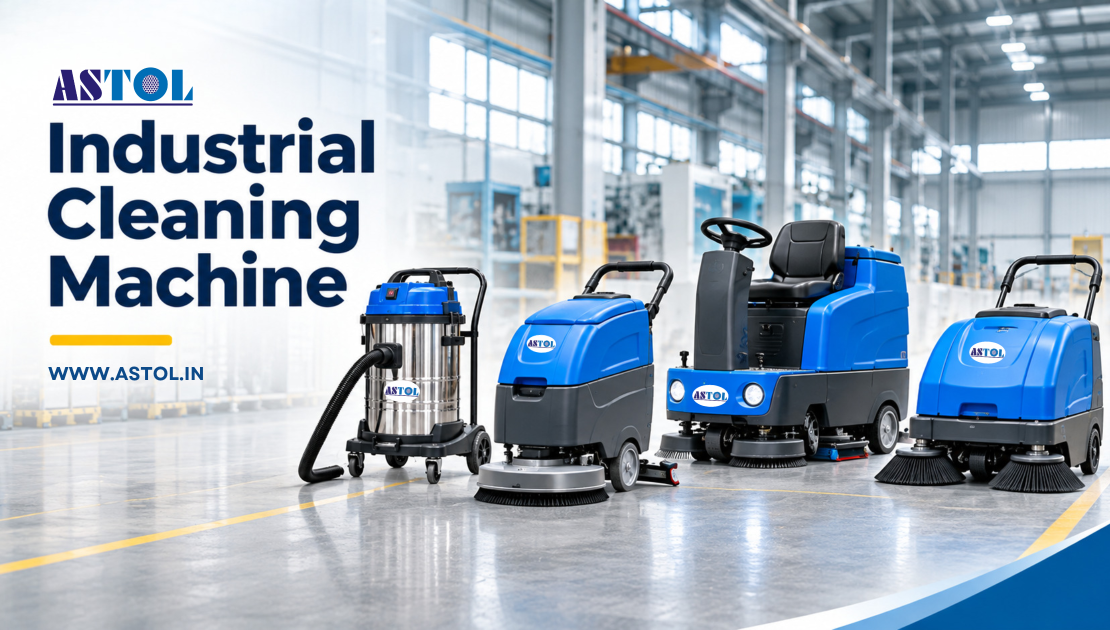
Industrial Cleaning Machine: Complete Guide to Types, Benefits & Applications
Keeping an industrial facility clean is not always easy. Factories, warehouses, manufacturing units, workshops, and commercial buildings deal with dust, dirt, oil stains, production waste, and other cleaning challenges every day.
Manual cleaning methods often take more time and require additional manpower, especially when businesses need to maintain large floor areas. An Industrial Cleaning Machine helps cleaning teams handle these tasks more efficiently and maintain cleaner working environments.
Today, businesses use different types of industrial cleaning machines for floor scrubbing, vacuum cleaning, sweeping, pressure washing, and surface maintenance. Each machine serves a different purpose, so choosing the right equipment is important.
In this guide, we will explore the types, benefits, applications, features, and buying considerations for industrial cleaning machines.
What Is an Industrial Cleaning Machine?
An Industrial Cleaning Machine is professional cleaning equipment that businesses use to clean large areas, floors, machinery, equipment, and other surfaces.
These machines help operators remove dust, dirt, debris, stains, oil residue, and other suitable materials from industrial and commercial environments.
Unlike basic household cleaning equipment, industrial cleaning machines support professional applications and frequent cleaning requirements. Manufacturers offer different models for specific tasks, including floor scrubbing, vacuum cleaning, sweeping, and high-pressure washing.
Businesses should select equipment according to the cleaning task, floor type, area size, operating conditions, and frequency of use.
Why Do Industries Need Industrial Cleaning Machines?
Factories and industrial facilities generate different types of dirt and waste during daily operations. Manual cleaning may not provide the speed or consistency that large facilities require.
Here are some important reasons to use professional cleaning machines.
1. Faster Cleaning
Industrial cleaning machines help operators cover large areas more efficiently than many manual cleaning methods. This allows cleaning teams to complete routine tasks in less time.
2. Reduced Manual Effort
Cleaning large factories and warehouses requires considerable physical effort. Machines such as scrubber dryers, sweepers, and vacuum cleaners reduce the need for repetitive manual cleaning.
3. Better Floor Maintenance
Dust, dirt, oil stains, and other residue can accumulate on industrial floors. Suitable floor cleaning machines help remove these materials and maintain cleaner surfaces.
4. Improved Cleaning Consistency
Manual cleaning results can vary depending on the operator and cleaning method. Machines help cleaning teams follow a more consistent cleaning process.
5. Higher Housekeeping Productivity
Professional cleaning equipment helps housekeeping teams manage daily cleaning tasks more efficiently, particularly in facilities with large floor areas.
6. Suitable for Different Cleaning Requirements
Businesses can choose different machines for different applications, from removing dust and debris to scrubbing floors and washing outdoor surfaces.
Types of Industrial Cleaning Machines
Different industrial environments require different cleaning equipment. Understanding the main types can help businesses select the right machine.
1. Industrial Vacuum Cleaner
Best for dust, dirt, debris and suitable liquid collection, depending on the model.
An Industrial Vacuum Cleaner collects dust, dirt, and debris from floors, machinery areas, workstations, and production spaces.
Businesses use these machines in factories, manufacturing units, workshops, warehouses, and other industrial facilities.
Common types include:
- Dry Vacuum Cleaner: Collects dust, dirt, and other dry debris.
- Wet & Dry Vacuum Cleaner: Collects compatible dry materials and liquid spills.
- Heavy-Duty Vacuum Cleaner: Handles demanding cleaning applications and frequent use.
When choosing an industrial vacuum cleaner, check suction performance, collection capacity, filtration, accessories, and the type of material you need to collect.
2. Industrial Scrubber Dryer
Best for washing and drying large floor areas.
An Industrial Scrubber Dryer cleans floors by using rotating brushes or pads and a cleaning solution. The machine scrubs the surface, collects dirty water through a vacuum system, and leaves the floor drier.
Businesses can use scrubber dryers in:
- Factories
- Warehouses
- Shopping malls
- Hospitals
- Airports
- Commercial buildings
- Manufacturing facilities
You can choose between walk-behind and ride-on scrubber dryers depending on the cleaning area and productivity requirements.
3. Industrial Sweeper Machine
Best for collecting dust, leaves, sand and loose debris.
An industrial sweeper machine uses rotating brushes to collect loose dirt and debris from floors and outdoor surfaces.
These machines help businesses maintain warehouses, factories, parking areas, internal roads, and industrial campuses.
Common options include:
- Walk-Behind Sweeper
- Ride-On Sweeper
- Manual Sweeper
- Outdoor Road Sweeper
Consider cleaning width, brush configuration, hopper capacity, filtration, and operating time when selecting a sweeper.
4. High Jet Pressure Washer
Best for removing stubborn dirt from suitable surfaces.
A High Jet Pressure Washer uses pressurised water to remove dirt, mud, grease, and other suitable deposits from surfaces.
Businesses can use pressure washers for cleaning:
- Industrial floors
- Machinery exteriors
- Vehicle surfaces
- Loading areas
- Outdoor pathways
- Building exteriors
- Equipment and tools
Before selecting a pressure washer, compare water pressure, flow rate, motor power, operating temperature, accessories, and the cleaning application.
Always check whether the surface and equipment can safely handle the selected water pressure.
5. Single Disc Scrubber Machine
Best for scrubbing, polishing and maintaining suitable floor surfaces.
A Single Disc Scrubber Machine uses a rotating brush or cleaning pad to scrub and maintain different types of floors.
Depending on the machine and accessories, operators can use it for:
- Floor scrubbing
- Floor polishing
- Carpet cleaning
- Surface maintenance
- Removing suitable stains and marks
Hotels, offices, hospitals, commercial buildings, and industrial facilities can use single-disc scrubbers for specialised floor cleaning tasks.
6. Steam Cleaner
Best for cleaning suitable surfaces using steam
Steam cleaners use heated steam to loosen dirt and clean suitable surfaces. Businesses can use them for selected cleaning applications in hotels, restaurants, kitchens, hospitals, and commercial facilities.
The machine and accessories should match the surface and cleaning requirement. Operators must follow manufacturer instructions when working with hot steam.
Best Industrial Cleaning Machine for Different Industries
Not every business needs the same cleaning equipment. The right machine depends on the facility, surface, type of dirt, and cleaning frequency.
| Industry / Application | Suitable Cleaning Machine |
|---|---|
| Manufacturing Units | Industrial Vacuum Cleaner |
| Warehouses | Sweeper Machine / Scrubber Dryer |
| Factories | Industrial Vacuum / Scrubber Dryer |
| Shopping Malls | Walk-Behind / Ride-On Scrubber Dryer |
| Hospitals | Professional Vacuum / Scrubber Dryer |
| Hotels | Vacuum Cleaner / Single Disc Scrubber |
| Restaurants | Wet & Dry Vacuum / Steam Cleaner |
| Parking Areas | Sweeper Machine / Pressure Washer |
| Workshops | Industrial Vacuum / Pressure Washer |
| Airports | Ride-On Scrubber Dryer / Sweeper |
Businesses should evaluate their cleaning requirements before purchasing equipment. Some facilities may need more than one type of machine to handle different cleaning tasks.
Key Features to Consider When Buying an Industrial Cleaning Machine
Choosing an industrial cleaning machine requires careful evaluation. The following features can help you make a better purchasing decision.
1. Cleaning Capacity
Consider how much area the machine can clean and how much dirt or waste it can collect.
For vacuum cleaners, check tank capacity. For scrubber dryers, check the solution and recovery tank capacities. For sweepers, check the waste hopper capacity.
2. Motor Performance
The machine should provide suitable performance for the intended cleaning application.
Compare the manufacturer’s specifications, including motor power, suction performance, brush performance, and operating requirements.
3. Cleaning Width
Cleaning width determines how much floor area the machine covers during each pass.
A wider cleaning path can help operators cover large areas more efficiently. Smaller machines may work better in narrow corridors and congested spaces.
4. Filtration System
Filtration plays an important role in vacuum cleaners and dust-control equipment.
Choose a filtration system that matches the type of dust and particles you need to collect. Fine, hazardous, combustible, or potentially explosive dust may require specialised and certified equipment.
5. Battery and Operating Time
For battery-powered equipment, check battery capacity, charging time, and expected operating time.
Choose a machine that can support your daily cleaning schedule.
6. Machine Durability
Industrial equipment should have construction suitable for its working environment and expected usage.
Check the quality of important components, availability of spare parts, and manufacturer’s recommendations.
7. Ease of Operation
Choose machines with practical controls and a design that operators can use comfortably.
Simple operation can also make employee training easier.
8. Maintenance and After-Sales Support
Before purchasing, check filter replacement, brush availability, spare parts, servicing, warranty, and technical support.
Reliable after-sales service can help businesses manage maintenance and reduce unexpected downtime.
How to Choose the Right Industrial Cleaning Machine
Follow these steps before selecting cleaning equipment for your facility.
Step 1: Understand Your Cleaning Requirements
Identify the cleaning tasks your team performs every day. Do you need to remove dust, scrub floors, collect debris, wash outdoor surfaces, or clean machinery?
Step 2: Identify the Type of Dirt
Different machines handle different cleaning materials.
For example:
- Dust and dry debris require a suitable vacuum cleaner.
- Loose dirt and leaves require a sweeper.
- Floor stains and dirt may require a scrubber dryer.
- Suitable stubborn deposits may require a pressure washer.
Step 3: Measure the Cleaning Area
Measure the total floor area and identify narrow spaces, obstacles, and high-traffic sections.
Large facilities may benefit from ride-on equipment, while smaller spaces may require compact walk-behind machines.
Step 4: Check the Floor Surface
Consider whether your facility has concrete, tiles, marble, epoxy, or another surface.
Select brushes, pads, cleaning methods, and machines that suit the floor material.
Step 5: Decide the Cleaning Frequency
A facility that requires cleaning several times a day may need equipment designed for frequent operation.
Consider expected operating hours and the workload before choosing a model.
Step 6: Evaluate the Budget
Do not compare machines only by their purchase price. Also consider maintenance, consumables, electricity or battery costs, spare parts, and expected operating requirements.
Step 7: Check Service and Spare Parts
Make sure the supplier can provide suitable technical support, spare parts, and maintenance assistance.
Industrial Cleaning Machine vs Manual Cleaning
Many businesses still depend on manual sweeping, mopping, and scrubbing. These methods may work for small spaces, but larger facilities often need professional equipment.
| Factor | Manual Cleaning | Industrial Cleaning Machine |
|---|---|---|
| Cleaning Speed | Generally slower | Faster for suitable applications |
| Physical Effort | Higher | Lower |
| Large Area Cleaning | Time-consuming | More efficient |
| Cleaning Consistency | Depends on operator | More consistent when operated correctly |
| Productivity | Limited by manual effort | Supports higher productivity |
| Applications | Basic cleaning tasks | Specialised commercial and industrial tasks |
Industrial cleaning machines do not eliminate the need for cleaning staff. Instead, they help operators complete cleaning tasks more efficiently.
Common Mistakes to Avoid When Buying Industrial Cleaning Equipment
Choosing Only Based on Price
A low-cost machine may not provide the capacity, performance, or durability your facility requires.
Ignoring the Cleaning Application
A vacuum cleaner cannot replace a floor scrubber, and a sweeper cannot perform every washing task. Select equipment according to the cleaning requirement.
Selecting the Wrong Machine Size
A small machine may take too long to clean a large area, while a large machine may struggle in narrow spaces.
Overlooking Maintenance Costs
Check the cost and availability of filters, brushes, pads, batteries, and other consumables.
Ignoring Operator Training
Train operators to use equipment correctly. Improper operation can affect cleaning results and equipment life.
Not Checking After-Sales Support
Always evaluate the supplier’s service network, spare parts availability, warranty, and technical support.
Maintenance Tips for Industrial Cleaning Machines
Regular maintenance helps businesses keep their cleaning equipment in good working condition.
- Clean brushes and pads after use.
- Empty vacuum containers and sweeper hoppers regularly.
- Clean or replace filters according to manufacturer instructions.
- Inspect hoses, cables, wheels, and other components.
- Clean scrubber dryer tanks after use.
- Check batteries and charging systems on battery-powered machines.
- Inspect pressure washer hoses and accessories.
- Follow the manufacturer’s preventive maintenance schedule.
Regular inspections can help operators identify problems early and reduce unexpected equipment downtime.
Safety Tips for Operating Industrial Cleaning Machines
Industrial cleaning equipment requires proper handling and operator training.
Always follow the manufacturer’s instructions and use the machine only for approved applications.
Train operators to understand machine controls, accessories, safety precautions, and emergency procedures.
Use suitable personal protective equipment according to the cleaning task. Inspect electrical cables, hoses, brushes, and other components before operation.
Never use a standard vacuum cleaner to collect hazardous, combustible, or potentially explosive dust unless the equipment is specifically designed and certified for that application.
Why Choose Astol Cleantech for Industrial Cleaning Machines?
Astol Cleantech Pvt. Ltd. provides professional cleaning equipment for commercial and industrial applications.
Its product range includes:
- Industrial Vacuum Cleaners
- Wet & Dry Vacuum Cleaners
- Walk-Behind Scrubber Dryers
- Ride-On Scrubber Dryers
- Single Disc Scrubber Machines
- Walk-Behind and Ride-On Sweepers
- High Jet Pressure Washers
- Steam Cleaners
- Housekeeping Cleaning Equipment
Businesses can explore different equipment options according to their cleaning area, floor type, waste material, operating frequency, and maintenance requirements.
Astol Cleantech helps businesses understand their cleaning needs and select suitable professional cleaning equipment for factories, warehouses, malls, offices, hotels, hospitals, and other commercial facilities.
Conclusion
An Industrial Cleaning Machine plays an important role in maintaining clean and organised commercial and industrial facilities.
From industrial vacuum cleaners and scrubber dryers to sweepers, pressure washers, and single-disc scrubbers, every machine serves a different cleaning purpose.
Before purchasing, evaluate the cleaning area, type of dirt, floor surface, cleaning frequency, machine capacity, filtration, durability, maintenance, and after-sales support.
Choosing the right industrial cleaning equipment can help businesses reduce manual effort, improve housekeeping productivity, and maintain cleaner working environments.
Frequently Asked Questions
1. What is an industrial cleaning machine?
An industrial cleaning machine is professional equipment that businesses use to clean floors, machinery, workstations, and other surfaces in industrial and commercial environments.
2. Which industrial cleaning machine is best for factories?
The right machine depends on the cleaning requirement. Factories may use industrial vacuum cleaners for dust and debris, scrubber dryers for floor cleaning, and sweepers for loose dirt.
3. What are the different types of industrial cleaning machines?
Common types include industrial vacuum cleaners, scrubber dryers, sweeper machines, high-pressure washers, single-disc scrubbers, and steam cleaners.
4. Which machine is best for warehouse floor cleaning?
A walk-behind or ride-on scrubber dryer can suit warehouse floors that require scrubbing and drying. A sweeper may work better for collecting loose dust and debris.
5. What is the difference between a sweeper and a scrubber dryer?
A sweeper collects loose dirt, dust, and debris using rotating brushes. A scrubber dryer uses brushes or pads and cleaning solution to scrub floors and collects dirty water through a vacuum system.
6. How do I choose the right industrial cleaning machine?
Consider the cleaning area, floor type, material being removed, cleaning frequency, machine capacity, operating requirements, maintenance, and service support.
7. Are industrial cleaning machines suitable for commercial buildings?
Yes. Businesses use professional cleaning machines in offices, hotels, shopping malls, hospitals, schools, airports, and other commercial facilities.
8. How often should industrial cleaning machines be maintained?
Follow the manufacturer’s recommended maintenance schedule. Clean and inspect the machine regularly, and replace filters, brushes, pads, and other components when required.
9. Can businesses rent industrial cleaning machines?
Some suppliers offer cleaning machines on rental plans. Rental availability and duration depend on the supplier, machine type, and location.