
Industrial Vacuum Cleaner for Factories & Manufacturing Units
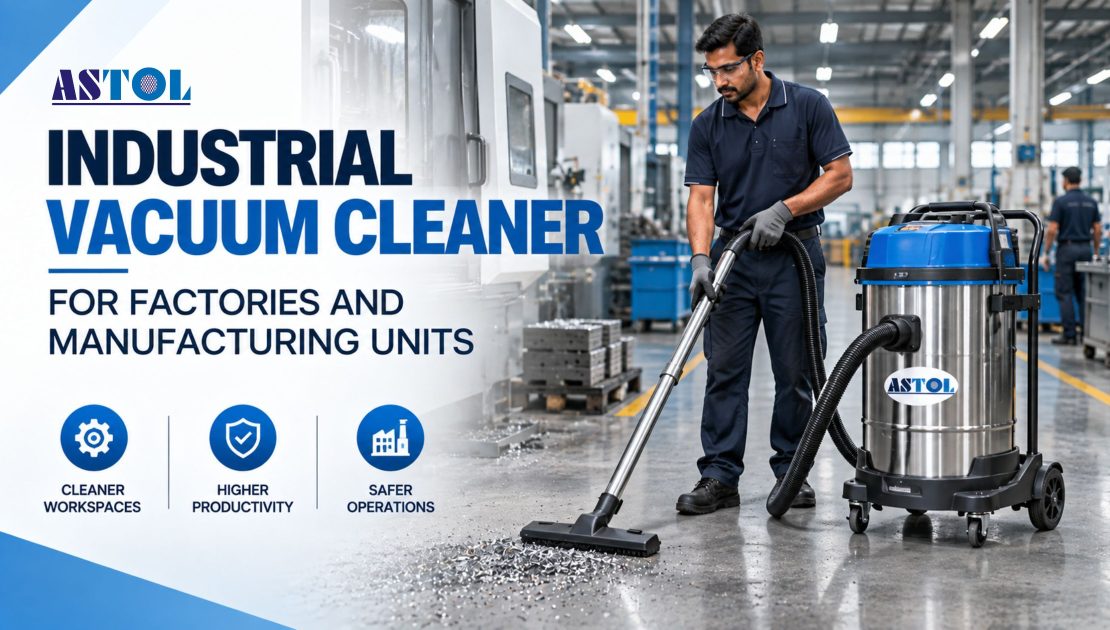
Factories and manufacturing units generate different types of dust, dirt, debris, and production waste every day. From fine dust on factory floors to metal particles, wood chips, packaging waste, and liquid spills, industrial environments often require more powerful cleaning equipment than standard household or commercial vacuum cleaners.
An Industrial Vacuum Cleaner is designed for demanding cleaning applications. It provides strong suction, larger collection capacity, durable construction, and suitable filtration systems to help businesses maintain cleaner production areas, warehouses, workshops, and machinery spaces.
In this blog, we will explain the benefits, applications, types, important features, and buying considerations for choosing an Industrial Vacuum Cleaner for factories and manufacturing units.
What Is an Industrial Vacuum Cleaner?
An Industrial Vacuum Cleaner is a heavy-duty cleaning machine designed for professional and industrial environments. It is built to collect dust, dirt, debris, and other suitable materials from floors, machinery, workstations, and production areas.
Unlike regular vacuum cleaners, industrial models handle frequent use and demanding cleaning conditions. Depending on the model, they can clean dry materials or both wet and dry materials.
The right machine depends on the type of material you need to collect, the amount of waste, cleaning frequency, and the environment where you will use it.
Why Do Factories Need Industrial Vacuum Cleaners?
Factories and manufacturing facilities can produce large amounts of dust and debris during daily operations. Manual sweeping can move fine particles into the air instead of collecting them effectively.
An industrial vacuum cleaner provides a controlled way to collect suitable dust and debris directly from floors and other surfaces.
Regular vacuum cleaning can also help cleaning teams maintain production areas, remove accumulated waste around equipment, and keep workspaces more organized.
For facilities with demanding cleaning requirements, using equipment designed for industrial applications can make routine housekeeping more efficient.
Benefits of Using an Industrial Vacuum Cleaner
Powerful Suction
Industrial vacuum cleaners provide suitable suction for demanding cleaning tasks, helping operators collect dust, dirt, and debris from floors, corners, machinery areas, and workstations.
Faster Cleaning
Large industrial facilities can take considerable time to clean manually. A suitable industrial vacuum cleaner allows operators to collect debris efficiently and complete cleaning tasks faster.
Reduced Manual Effort
Instead of relying entirely on sweeping and manual collection, cleaning staff can use a vacuum machine to collect waste with less physical effort.
Better Dust and Debris Collection
Vacuum cleaning helps collect dust and debris instead of simply moving it from one area to another. Suitable filtration can also help manage fine particles according to the machine’s specifications.
Large Collection Capacity
Many industrial models have larger collection tanks or containers, allowing operators to clean for longer periods before emptying the collected material.
Common Applications of Industrial Vacuum Cleaners in Manufacturing Units
Factory Floor Cleaning
Factory floors can accumulate dust, dirt, packaging materials, production residue, and other debris. Industrial vacuum cleaners can help maintain cleaner working areas.
Machinery Cleaning
Dust and loose particles can accumulate around machinery and equipment. Suitable vacuum accessories can help operators clean difficult-to-reach areas.
Production Areas
Manufacturing processes may generate different types of waste. An industrial vacuum cleaner can help collect suitable production debris and maintain cleaner workspaces.
Warehouses
Warehouses can accumulate dust, packaging waste, and debris due to regular movement of goods and personnel. Industrial vacuum cleaners can support routine warehouse cleaning.
Workshops
Workshops may generate dust, wood particles, metal particles, or other debris depending on the operation. The vacuum should always be selected according to the specific material being collected.
Maintenance Areas
After repair or maintenance work, dust and debris may remain around equipment. An industrial vacuum can help cleaning teams restore the area to a cleaner condition.
Types of Industrial Vacuum Cleaners
Different industrial environments require different vacuum configurations.
Wet & Dry Industrial Vacuum Cleaner
Wet and dry vacuum cleaners collect compatible dry debris and liquid spills. They work well in facilities that need to handle both types of cleaning.
Dry Industrial Vacuum Cleaner
Dry vacuum cleaners collect dust, dirt, and other dry debris. They work well for applications where you do not need to collect liquids.
Heavy-Duty Industrial Vacuum Cleaner
Heavy-duty models handle demanding applications that require frequent cleaning and higher collection capacity.
Portable Industrial Vacuum Cleaner
Portable models allow operators to move the vacuum cleaner between different areas of a factory or workshop. They work well when cleaning teams need to clean multiple workstations.
Key Features to Look for in an Industrial Vacuum Cleaner
Choosing the right Industrial Vacuum Cleaner requires understanding the cleaning application.
Motor and Suction Performance
The machine should provide suitable suction for the type and quantity of material you need to collect. Do not select a machine based only on motor wattage; consider the manufacturer’s actual performance specifications.
Collection Capacity
A larger collection tank helps operators clean large areas and collect significant quantities of debris without frequent emptying.
Filtration System
The filter is an important part of an industrial vacuum. Select a filtration system appropriate for the type of dust or particles being collected.
For fine, hazardous, or combustible dust, use equipment specifically designed and certified for that application rather than a standard industrial vacuum.
Wet & Dry Capability
If your facility regularly handles both dry debris and liquid spills, a wet and dry model can provide greater versatility.
Durable Construction
Industrial equipment should be capable of handling regular use in demanding environments. Durable construction can contribute to longer service life when the machine is properly maintained.
Hose and Accessories
Different cleaning tasks require different accessories. Check whether suitable floor tools, crevice tools, brushes, hoses, and other attachments are available for your application.
Mobility
Strong wheels and practical machine design make it easier to move the vacuum between production areas, warehouses, and workshops.
How to Choose the Right Industrial Vacuum Cleaner for a Factory
The right machine depends on your facility’s specific cleaning requirements.
First, identify the type of material you need to collect. This could include general dust, fine particles, production debris, packaging waste, or compatible liquid spills.
Next, consider the quantity of material generated and how frequently cleaning is required. A facility with heavy daily cleaning requirements may need a larger collection capacity and a machine designed for more intensive use.
The size of the cleaning area is also important. Large facilities may benefit from equipment that can operate efficiently over extended cleaning periods.
You should also consider filtration requirements, hose length, accessories, machine mobility, maintenance, spare parts, and after-sales service.
For hazardous, combustible, or potentially explosive dust, consult the equipment manufacturer or a qualified specialist to ensure the vacuum is appropriately certified for the specific hazard.
Industrial Vacuum Cleaner vs Regular Vacuum Cleaner
Regular household vacuum cleaners handle light-duty domestic cleaning, but they cannot handle continuous industrial use or heavy production debris.
Industrial vacuum cleaners handle demanding environments and typically provide stronger construction, larger collection capacity, suitable filtration, and configurations for professional applications.
Choose the right vacuum cleaner based on the material you need to collect, cleaning frequency, working environment, and manufacturer’s specifications
Safety Considerations When Using an Industrial Vacuum Cleaner
Safety is particularly important in manufacturing environments.
Follow the manufacturer’s instructions when operating the vacuum cleaner, and choose equipment that suits the material you need to collect.
Never use a standard vacuum cleaner to collect hazardous, combustible, or potentially explosive dust. Use a machine specifically designed and certified for these applications.
Inspect hoses, cables, filters, and collection containers regularly. Operators should also follow the facility’s safety procedures and use appropriate personal protective equipment where required.
Maintenance Tips for Industrial Vacuum Cleaners
Regular maintenance helps maintain cleaning performance and extend equipment life.
Clean or replace filters according to the manufacturer’s recommendations. A blocked filter can reduce airflow and suction performance.
Empty the collection container regularly and clean it according to the manufacturer’s instructions.
Inspect hoses and accessories for damage or blockages. Check cables, wheels, seals, and other components periodically.
For wet and dry models, clean and dry relevant components after liquid collection as recommended by the manufacturer.
Following a preventive maintenance schedule can also help reduce unexpected downtime.
Why Choose Astol Cleantech for Industrial Vacuum Cleaners?
Astol Cleantech Pvt. Ltd. provides professional cleaning equipment for commercial and industrial applications.
Its cleaning equipment range includes Industrial Vacuum Cleaners, Wet & Dry Vacuum Cleaners, Scrubber Dryers, Single Disc Scrubbers, Ride On Sweepers, Steam Cleaners, and High Jet Pressure Washers.
For factories and manufacturing units, selecting the right vacuum cleaner requires understanding the type of material, cleaning frequency, area size, filtration requirements, and operating environment.
Astol Cleantech provides product guidance and after-sales support to help businesses select suitable professional cleaning equipment.
Conclusion
An Industrial Vacuum Cleaner is an important cleaning solution for factories and manufacturing units that deal with regular dust, dirt, debris, and production waste.
Compared with manual sweeping and standard household vacuum cleaners, suitable industrial models can provide efficient material collection, reduced manual effort, larger capacity, and configurations designed for professional applications.
Before purchasing, evaluate the material you need to collect, suction performance, filtration system, collection capacity, wet or dry cleaning requirements, machine durability, accessories, maintenance needs, and after-sales support.
Choosing the right Industrial Vacuum Cleaner can help factories and manufacturing units maintain cleaner and more organized working environments while making routine cleaning tasks more efficient.
Frequently Asked Questions
What is an Industrial Vacuum Cleaner used for in factories?
It is used to collect suitable dust, dirt, debris, production waste, and compatible liquid spills from factory floors, machinery areas, workshops, warehouses, and other industrial spaces.
Can an Industrial Vacuum Cleaner collect both wet and dry materials?
Yes, specific Wet & Dry Industrial Vacuum Cleaners are designed for both compatible dry materials and liquid collection. Always check the manufacturer’s specifications before use.
What is the difference between an industrial and regular vacuum cleaner?
Industrial vacuum cleaners are designed for more demanding professional applications and may offer greater collection capacity, durable construction, suitable filtration, and stronger performance than typical household models.
How do I choose an Industrial Vacuum Cleaner for my manufacturing unit?
Consider the material being collected, quantity of waste, floor area, cleaning frequency, suction requirements, filtration, collection capacity, accessories, maintenance, and service support.
How often should an Industrial Vacuum Cleaner be maintained?
Basic cleaning and inspection should be performed regularly, while filter replacement and preventive maintenance should follow the manufacturer’s recommended schedule.
What type of filter is suitable for industrial dust?
The correct filter depends on the size and nature of the dust. Fine, hazardous, combustible, or specialized dust may require specific filtration and certified equipment. Consult the manufacturer for the appropriate configuration.
Can an Industrial Vacuum Cleaner be used for machinery cleaning?
Yes, suitable industrial vacuum cleaners can be used around machinery and equipment with the appropriate hose and accessories, provided the application is permitted by the machine manufacturer.